 Skip to content

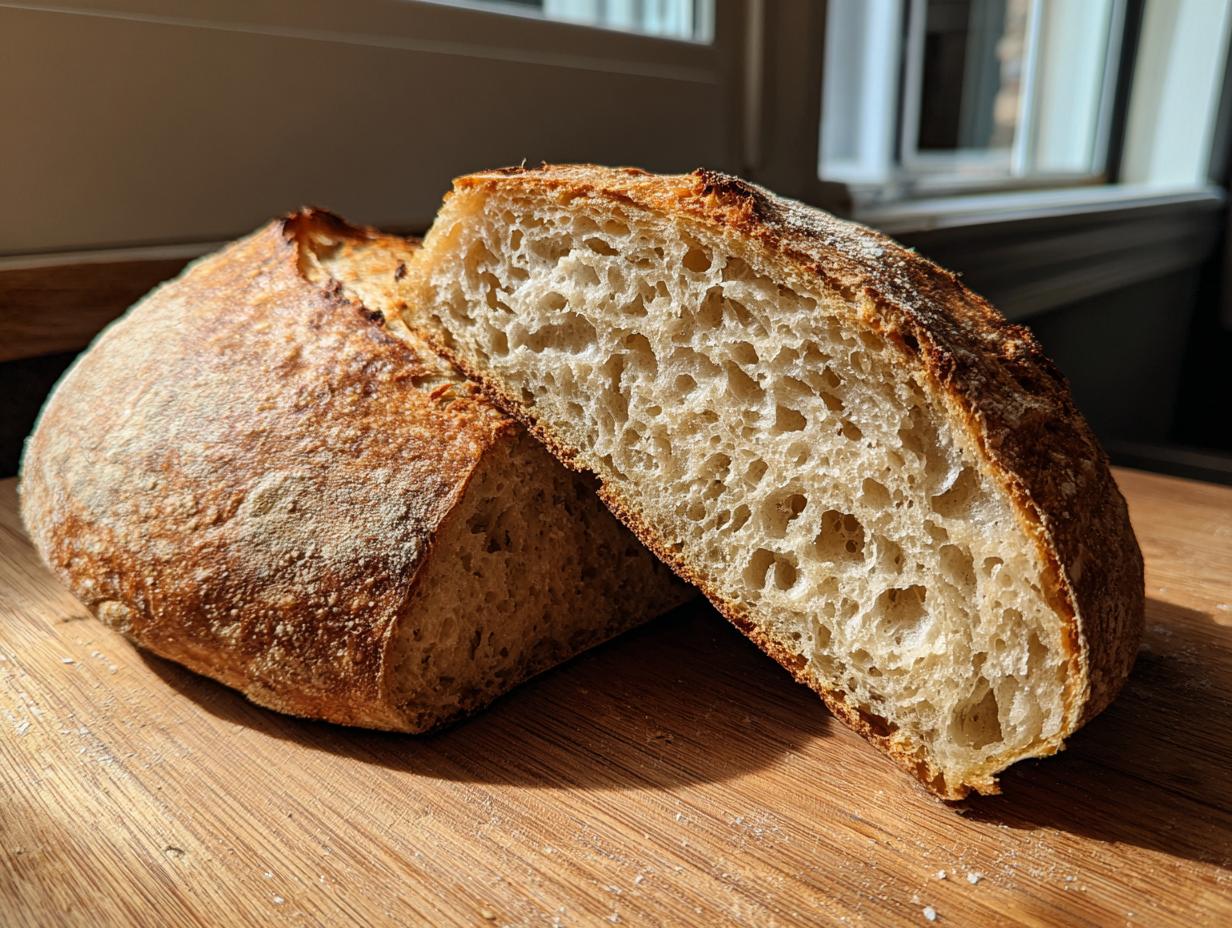
There’s something magical about pulling a loaf of homemade sourdough from the oven—the crackling crust, the warm, yeasty aroma filling the kitchen, that first slice revealing all those beautiful air pockets. My Brot #81 – Klassisches Dinkel Sauerteigbrot is my go-to when I want a loaf that’s hearty, flavorful, and just a little bit special. Spelt flour gives it a nutty depth that regular wheat bread just can’t match, and the slow fermentation from the sourdough starter makes it easier to digest, too. Every time I bake this bread, I’m reminded why sourdough is worth the patience—it’s alive, unpredictable, and utterly rewarding. Whether you’re new to baking or a seasoned pro, this loaf is a perfect way to fall in love with the process all over again. Just wait until you taste that first bite—crisp crust, chewy crumb, and that unmistakable tang only sourdough can deliver.
Why You’ll Love This Brot #81 – Klassisches Dinkel Sauerteigbrot
This isn’t just bread—it’s an experience. Here’s why I’m absolutely obsessed with this loaf, and why you will be too:
- That unforgettable flavor: Spelt flour brings a warm, nutty richness that regular wheat just can’t match, and the sourdough fermentation adds this incredible depth—like a subtle tang that makes every bite interesting.
- Wholesome & forgiving: Spelt is easier on some stomachs than modern wheat, and sourdough’s slow fermentation makes it gentler to digest (plus, no commercial yeast means no weird additives!).
- The texture dreams are made of: Crackly, blistered crust that shatters when you bite into it, hiding a chewy, airy crumb inside. It’s the kind of bread you’ll tear into piece by piece without even thinking.
- Pure baking joy: There’s something so satisfying about working with a living dough—it’s slow, hands-on, and the results feel like a little victory every single time.
Trust me, once you’ve had a slice of this toasted with butter, you’ll never look at store-bought bread the same way again.
Ingredients for Brot #81 – Klassisches Dinkel Sauerteigbrot
Okay, let’s talk ingredients—this is where the magic starts! Every single one matters in sourdough, so I’m super picky about what goes into my bread. Here’s exactly what you’ll need:
- 500g spelt flour – I love using whole grain for extra nuttiness, but white spelt works beautifully too if you want a lighter crumb
- 300ml lukewarm water – Not hot, not cold—think baby bathwater temperature (about 30°C/85°F). Filtered is best if your tap water tastes strongly of chlorine
- 100g active sourdough starter – Must be bubbly and happy at 100% hydration (meaning equal parts flour and water by weight)
- 10g fine sea salt – None of that iodized table stuff—the good flaky salt makes all the difference
That’s it! Just four simple ingredients, but when they come together with time and care? Pure bread perfection. Oh, and please—I beg you—use a kitchen scale. Cups just don’t cut it with sourdough baking!
Equipment You’ll Need
Listen, you don’t need fancy gadgets to make incredible sourdough—just a few trusty tools that’ll make your life easier. Here’s what I always grab before diving into my Brot #81:
- A sturdy mixing bowl – Big enough for the dough to double in size
- Kitchen scale – Non-negotiable for precise measurements
- Dough scraper – Your best friend for handling sticky spelt dough
- Proofing basket (banneton) – Gives the loaf that gorgeous shape
- Baking stone – For that perfect crusty bottom
- Razor blade – Makes clean scoring cuts so your bread blooms beautifully
That’s it! Well, besides an oven and some patience—but we’ll get to that part soon enough.
How to Make Brot #81 – Klassisches Dinkel Sauerteigbrot
Alright, let’s get our hands doughy! Making this spelt sourdough is a slow dance—not complicated, but full of little moments that matter. Follow these steps, and you’ll have a loaf that’ll make you feel like a baking wizard.
Mixing the Dough
First things first: grab that big bowl and weigh out your flour. Dump in the water—I like to pour it around the edges to help hydrate all the flour evenly. Now plop in that bubbly sourdough starter (if it floats in water, you’re golden!). Mix it all together with your hands or a wooden spoon until you’ve got a shaggy, messy dough. Don’t worry about kneading yet—just make sure no dry flour patches remain.
Here’s the secret: walk away for 30 minutes. This “autolyse” rest lets the flour fully hydrate and makes the gluten start forming on its own. When you come back, sprinkle the salt over the dough—this is when the real magic begins!
First Rise
Now we knead—but gently! Spelt flour is more delicate than wheat, so instead of aggressive punching, I do a series of “stretch and folds.” Wet your hands, grab one side of the dough, stretch it upward, and fold it over itself. Rotate the bowl 90 degrees and repeat. Do this every 30 minutes for the first 2 hours of bulk fermentation (that’s baker talk for the first rise).
Let the dough rise at room temperature (around 22°C/72°F) for 4-6 hours total. You’ll know it’s ready when it’s puffy, has bubbles on top, and jiggles like a waterbed when you shake the bowl.
Shaping and Final Proof
Flour your work surface lightly—spelt dough is stickier than wheat, so don’t be shy with the dusting. Tip the dough out and shape it into a tight ball by pulling edges toward the center. Let it rest seam-side up for 20 minutes (this relaxes the gluten for final shaping).
Now shape it again, creating surface tension by pulling the dough against the counter. Pop it seam-side up into a floured proofing basket. Cover with a damp towel and let it proof at room temp for 2 hours—or overnight in the fridge for extra flavor development!
Baking the Brot #81 – Klassisches Dinkel Sauerteigbrot
Preheat your oven to 240°C (465°F) with a baking stone or steel inside for at least 45 minutes—crucial for that instant oven spring! Right before baking, flip your dough onto parchment paper. Score deeply (about 1cm) with a razor—this gives the bread room to expand beautifully.
Slide it onto the hot stone and toss a few ice cubes into the bottom of the oven for steam. Bake for 20 minutes with steam, then reduce heat to 220°C (425°F) and bake another 20 minutes until deeply golden. That hollow sound when you tap the bottom? That’s your victory song!
Tips for Perfect Brot #81 – Klassisches Dinkel Sauerteigbrot
After baking countless loaves of this spelt sourdough, I’ve picked up some tricks that make all the difference:
- Hydration is key: Spelt absorbs water differently than wheat—if your dough feels like concrete, add a splash more water during mixing. Too sticky? A dusting of flour helps.
- Watch, don’t clock-watch: Fermentation times vary! Look for bubbles on top and a 50% size increase rather than sticking strictly to hours.
- Score with confidence: Hesitant cuts lead to uneven expansion. Use a razor at a 45° angle and go deep—about 1cm—for that perfect “ear.”
- Steam matters: No ice cubes? Try spraying the oven walls with water right after loading the bread.
Remember—sourdough is forgiving. Even “mistakes” usually taste amazing!
Ingredient Substitutions
Listen, I get it—sometimes you gotta work with what you’ve got! Here’s how to tweak this recipe without losing that amazing Brot #81 character:
- Different starter? A rye starter adds earthiness but may make the dough stickier—reduce water by 10ml if using.
- No spelt? Whole wheat flour works in a pinch, but expect a denser crumb.
- Want crunch? Toss in 50g sunflower or pumpkin seeds during mixing—they’ll toast up beautifully!
Just remember: every change affects fermentation and texture, so adjust slowly and take notes for next time!
Serving Suggestions
Oh, where do I even start with serving this beauty? My Brot #81 is practically begging to be torn apart warm from the oven—slathered with good butter that melts into all those nooks and crannies. But if you can resist eating it plain (no judgment if you can’t!), try it toasted with creamy avocado and flaky salt, dunked into a steaming bowl of potato-leek soup, or piled high with sharp aged cheddar and a dollop of fig jam. Honestly? It makes even the simplest meals feel like a special occasion.
Storing and Reheating
This bread is best eaten fresh (who am I kidding—all bread is!), but if you must save some, here’s how: Wrap it in a clean cotton towel at room temp for up to 3 days. For longer storage, slice and freeze in a ziplock—just pop slices straight into the toaster when the craving hits! Want to revive a whole loaf? Spritz with water and bake at 180°C (350°F) for 5 minutes—good as new.
Brot #81 – Klassisches Dinkel Sauerteigbrot FAQs
I get asked about this bread all the time—here are the questions that pop up most often, along with my tried-and-true answers:
Can I use commercial yeast instead of sourdough starter?
Technically? Yes—but you’ll lose that incredible depth of flavor! If you’re in a pinch, mix 2g instant yeast with the flour. The texture will be softer, more like sandwich bread. But trust me, the sourdough version is worth the wait!
Help! My dough is too sticky—what do I do?
Don’t panic! Spelt naturally makes stickier dough than wheat. Wet your hands before handling it, and use a dough scraper. If it’s truly unworkable, let it rest 15 minutes—the flour will absorb more moisture. Resist adding too much extra flour though—that gorgeous open crumb depends on proper hydration!
How do I know when my sourdough starter is ready to use?
Your starter should be bubbly, domed on top, and roughly doubled in size. The float test never lies: drop a spoonful in water—if it floats, it’s active! If not, give it another feeding and wait 2-4 more hours.
Why didn’t my bread rise much in the oven?
Usually this means under-proofing. Next time, let it proof until it passes the “poke test”—gently press the dough; if it springs back slowly but leaves a slight indent, it’s ready. Also, make sure your oven and baking stone are fully preheated—that initial heat shock is crucial for lift!
Can I make this dough ahead?
Absolutely! After shaping, pop it in the fridge overnight (up to 12 hours) for a slow final proof. The cold develops even more flavor! Just let it sit at room temp 30 minutes before baking.
Nutritional Information
Just a quick note—these nutritional estimates can vary based on your exact ingredients and brands. Spelt flour naturally packs more protein and minerals than regular wheat, and that slow fermentation makes nutrients easier to absorb. But let’s be real—you’re here for the incredible taste, right?
Share Your Brot #81 – Klassisches Dinkel Sauerteigbrot
I’d love to see your beautiful loaves! Snap a photo of that golden crust and tag me—nothing makes me happier than seeing fellow bakers fall in love with this recipe. Questions? Just ask!
Print
Brot #81 – Irresistible Spelt Sourdough Bread Recipe
- Total Time: 7 hours 10 minutes
- Yield: 1 loaf 1x
- Diet: Vegetarian
Description
A classic spelt sourdough bread with a rich flavor and hearty texture.
Ingredients
- 500g spelt flour
- 300ml water
- 100g active sourdough starter
- 10g salt
Instructions
- Mix flour, water, and sourdough starter in a bowl.
- Let the dough rest for 30 minutes.
- Add salt and knead for 10 minutes.
- Cover and let rise for 4-6 hours.
- Shape the dough and place in a proofing basket.
- Let it proof for another 2 hours.
- Preheat oven to 240°C (465°F) with a baking stone.
- Bake for 40 minutes until golden brown.
Notes
- Use a kitchen scale for precise measurements.
- Adjust water quantity based on flour absorption.
- Score the dough before baking for better expansion.
- Prep Time: 30 minutes
- Cook Time: 40 minutes
- Category: Bread
- Method: Baking
- Cuisine: German
Nutrition
- Serving Size: 1 slice (50g)
- Calories: 120
- Sugar: 1g
- Sodium: 200mg
- Fat: 1g
- Saturated Fat: 0.2g
- Unsaturated Fat: 0.5g
- Trans Fat: 0g
- Carbohydrates: 25g
- Fiber: 3g
- Protein: 5g
- Cholesterol: 0mg


